
How to Store Bagels So They Stay Fresh: Counter, Freezer, and Everything In Between
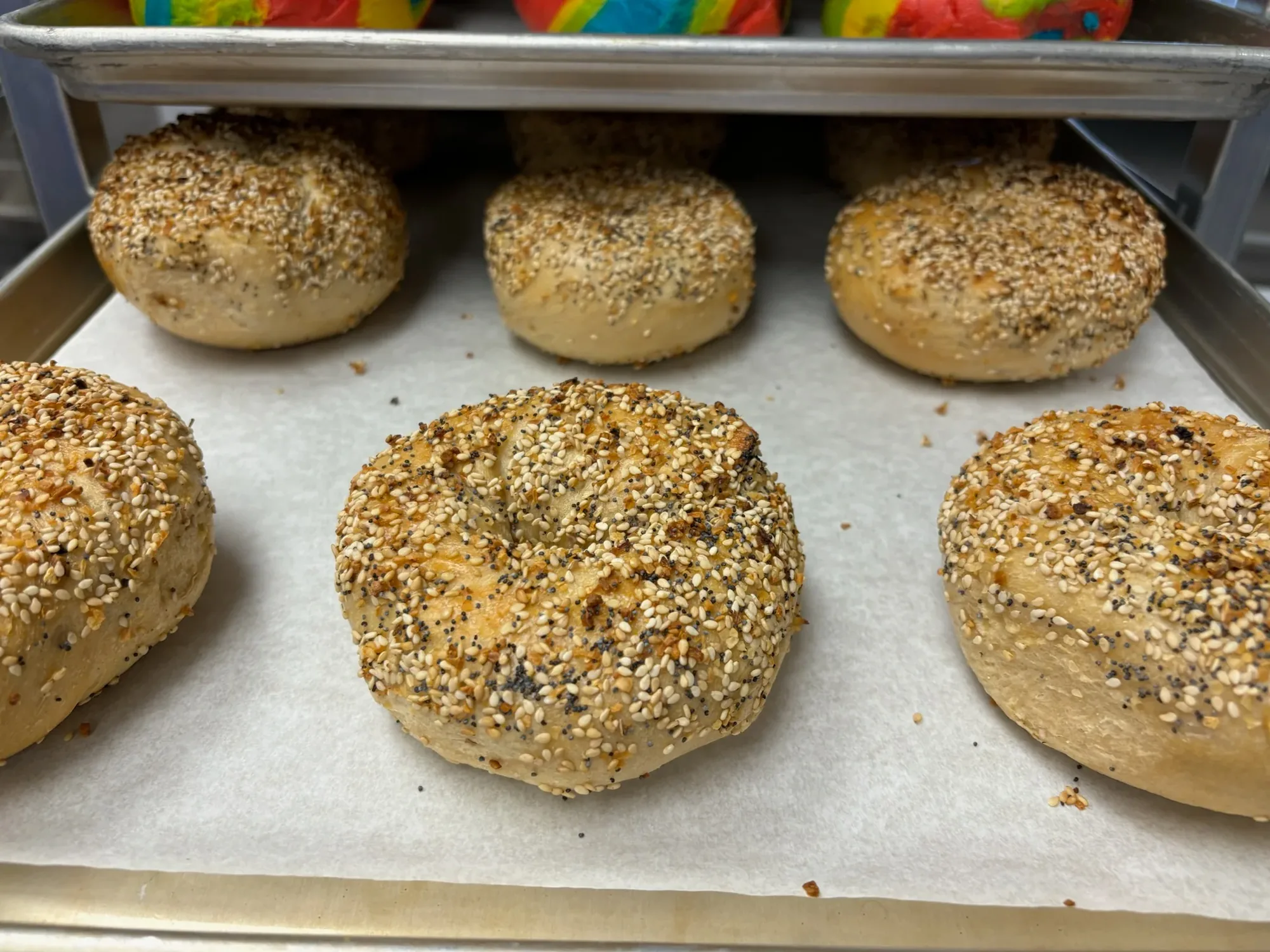
You bought a dozen bagels from B's Bagels in Westfield, Indiana, maybe a mixed selection of everything, sesame, and plain with a tub of house-made cream cheese. Now what? Do they go on the counter? In the fridge? The freezer? The answer matters more than most people realize, and getting it wrong turns a fantastic bagel into a dense, chewy disappointment by morning.
The short answer: yes, bagels freeze very well. Slice them, seal them in a freezer bag with the air pressed out, eat them within one to three months, and toast them straight from frozen. Bagels you will eat today belong on the counter in a paper bag, and none of them belong in the fridge.
Here is the full storage decision tree, from same-day keeping all the way to long-term freezing, so every bagel you bring home is as good as it was at the counter.
Same-Day Storage: The Counter Is Your Friend
If you plan to eat your bagels within six to eight hours of picking them up, a paper bag or a clean kitchen towel on the counter is all you need. The paper lets the crust breathe without trapping moisture. Plastic bags are the enemy here, they soften the crust almost immediately by trapping steam inside.
Authentic New York style bagels like the ones baked fresh at B's are built for same-day eating. The boil-and-bake process creates a crust that is meant to be crisp and slightly chewy at the same time, and that crust stays at its best when it can breathe at room temperature for the first several hours after baking.
Overnight Keeping: Skip the Fridge
This is the single most common bagel storage mistake: putting a fresh bagel in the refrigerator overnight.
The fridge is the enemy of bagels. Cold refrigerator air accelerates starch retrogradation, the scientific name for what happens when the starch molecules in bread re-crystallize as they cool. The result is a bagel that feels stale and dry far faster than one stored at room temperature or in the freezer. If you need to keep bagels overnight and plan to eat them the next morning, you have two better options:
- Counter in a paper bag, tightly folded closed: Works well for one night in most climates. The bagel will lose some of its fresh-baked crispness, but a quick toast brings it back.
- Freezer, sliced first: The single best move for any bagel you won't eat within twelve hours. More on this below.
If you put a bagel in the fridge, you haven't ruined it, just toast it low and slow (a toaster oven at 325°F for four to five minutes works well) to push out the moisture and revive the crust. But you will notice the difference compared to a properly stored one.
Multi-Day Storage: The Freezer Is Your Best Tool
For bagels you won't eat today or tomorrow, the freezer is the right call, and when done correctly, it produces results that are nearly indistinguishable from fresh.
Here is how to do it right:
- Slice the bagels before freezing. This is the most important step. A frozen whole bagel takes much longer to toast evenly, and the interior can stay cold and gummy while the outside over-toasts. Sliced bagels go directly from freezer to toaster, no thawing required.
- Wrap each half individually or place in a zip-top bag with the air pressed out. This prevents freezer burn and keeps each half from sticking together.
- Label with the date. Frozen bagels are best eaten within one to three months. After that, they are still safe but begin to lose flavor and texture.
- Toast straight from frozen. Drop sliced halves directly into the toaster on a medium-high setting. Two cycles may be needed depending on your toaster. The result is a bagel with a crisp exterior and a warm, chewy interior, very close to what just came out of the oven.
What About Homemade Bagels?
Homemade bagels follow the same rules as freshly baked shop bagels, with one caveat: they often have fewer preservatives than supermarket varieties, so their window at room temperature is slightly shorter. If you baked a batch at home, aim to eat them the same day or slice and freeze immediately after they cool completely. Wrapping warm bagels traps steam and ruins the crust, so always let them reach room temperature before sealing.
A Quick Reference Guide
- Eating in under 8 hours: Paper bag, counter, room temperature.
- Eating tomorrow morning: Slice now, freeze tonight, toast in the morning.
- Eating in 2–7 days: Slice and freeze immediately. Toast from frozen when ready.
- Avoid the fridge unless it is your only option, and if so, toast low and slow to recover texture.
Why Freshness Starts at the Bakery
No storage method replaces the quality of the bagel itself. A bagel that starts as a small-batch, boiled-and-baked product made fresh throughout the day gives you a much wider freshness window than a mass-produced supermarket bagel that was baked days ago and shipped.
At B's Bagels in Westfield, Indiana, bagels are made in small batches so the product coming out of the oven is as fresh as possible throughout the morning. That freshness, the snap of the crust, the chew in the crumb, is what you are preserving when you store them correctly at home.
The next time you pick up a dozen, you know exactly what to do with every single one. And if you want to start with the best possible bagel to preserve, stop in and see us at B's Bagels in Westfield. With 238 Google reviews and a 4.5-star rating, we think the community agrees they are worth protecting.
Quick answers
Can you freeze bagels?
Yes. Slice them first, freeze the same day in a sealed bag, eat within one to three months for the best flavor, and toast straight from frozen.
How do you keep bagels fresh overnight?
Store them at room temperature in a paper or bread bag. Avoid the refrigerator, which stales bread faster.